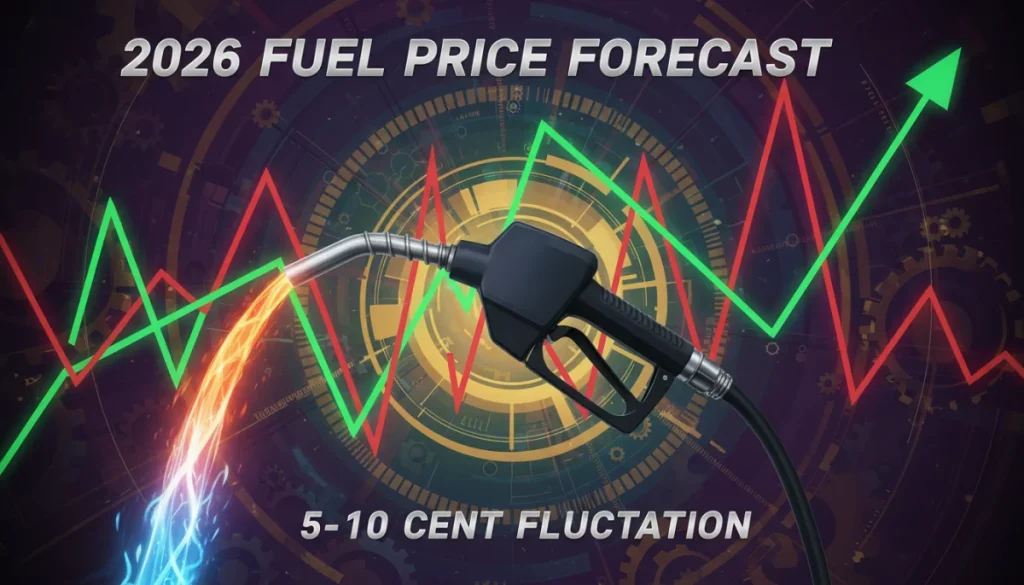
DOE 2026 Fuel Price Forecast: 5-10 Cent Fluctuation Expected
Anúncios
The Department of Energy forecasts a 5-10 cent per gallon fluctuation in 2026 fuel prices, influenced by global oil production, geopolitical stability, and evolving consumer demand for traditional and alternative energy sources.
As we navigate the complexities of the global energy landscape, understanding future fuel price movements becomes paramount for consumers and businesses alike. The Department of Energy Forecasts 2026 Fuel Price Trends: Expect a 5-10 Cent Fluctuation Per Gallon (COMPARISON/ANALYSIS) offers a crucial glimpse into what lies ahead, providing valuable insights for planning and budgeting in an ever-evolving market.
Anúncios
Understanding the Department of Energy’s Role
The Department of Energy (DOE) plays a pivotal role in shaping the energy dialogue within the United States. Its forecasts are not mere predictions but rather comprehensive analyses rooted in extensive data, geopolitical intelligence, and economic modeling. These projections serve as a guiding light for policymakers, industries, and the general public, offering a framework for anticipating future energy costs and trends. The DOE’s commitment to transparency and meticulous research ensures that its outlook on fuel prices is one of the most respected and authoritative.
Their methodology involves a multifaceted approach, considering a wide array of variables that can influence the price of crude oil and, consequently, refined petroleum products like gasoline and diesel. This includes everything from global supply and demand dynamics to the impact of climate policies and technological advancements in energy production and consumption. The precision of their analysis helps to mitigate some of the uncertainty inherent in energy markets.
Key Factors in DOE Forecasting
The DOE’s forecasting process integrates several critical elements to arrive at its projections. These factors are continuously monitored and updated, reflecting the dynamic nature of the energy sector.
Anúncios
- Global Crude Oil Production: This includes output from OPEC+ nations, non-OPEC producers, and the strategic petroleum reserves.
- International Demand Trends: Economic growth rates in major consuming nations, particularly China and India, significantly influence global demand.
- Geopolitical Stability: Conflicts or political unrest in oil-producing regions can disrupt supply chains and elevate prices.
- Refinery Capacity and Operations: The ability of refineries to process crude oil into usable fuels, alongside maintenance schedules and unexpected outages, plays a direct role in supply.
By meticulously weighing these and other factors, the DOE constructs a detailed picture of potential future market conditions. This holistic view is essential for understanding the nuances behind the projected 5-10 cent fluctuation.
The DOE’s analysis extends beyond just raw numbers, delving into the underlying causes of potential price movements. This deep dive provides context for why certain trends are expected and how various scenarios, such as a major economic rebound or a significant supply disruption, could alter the forecast. This comprehensive understanding empowers stakeholders to make more informed decisions.
Global Oil Supply and Demand Dynamics
The intricate dance between global oil supply and demand remains the primary driver of fuel prices. Even a slight imbalance can send ripples through the market, affecting costs at the pump. The DOE’s 2026 forecast inherently accounts for these complex interactions, projecting how production levels from major oil-producing nations will meet or fall short of the world’s thirst for energy.
On the supply side, decisions by OPEC+ nations, particularly Saudi Arabia and Russia, hold significant sway. Their collective agreements on production quotas directly impact the global availability of crude oil. Furthermore, the growth of non-OPEC production, notably from the United States’ shale oil industry, adds another layer of complexity. Technological advancements in extraction methods have allowed for increased output, but these are often subject to economic viability at prevailing price levels.
Projected Production Levels
For 2026, the DOE anticipates a delicate balance. While some regions may see modest increases in production due to new investments or improved efficiencies, others might face declines due to aging fields or geopolitical constraints. This patchwork of production changes contributes to the overall global supply picture.
- OPEC+ Strategy: Continued monitoring of their production cuts or increases based on market conditions.
- U.S. Shale Output: Expected to remain a significant contributor, though growth rates might moderate.
- Non-OPEC Growth: Other countries, such as Brazil and Guyana, are projected to see incremental increases.
The demand side, equally crucial, is heavily influenced by global economic health. A robust global economy typically translates to higher demand for transportation fuels, industrial energy, and petrochemical feedstocks. Conversely, an economic downturn can quickly dampen demand, leading to price declines. The DOE’s forecast considers various economic growth scenarios across different regions of the world.
Emerging economies, particularly in Asia, are expected to continue driving a substantial portion of global oil demand growth. However, the increasing adoption of electric vehicles and improvements in fuel efficiency in developed nations could partially offset this growth, creating a push-and-pull effect on overall demand figures. This dynamic interplay between increasing demand in some sectors and decreasing demand in others complicates forecasting efforts.
Geopolitical Influences on Fuel Prices
Geopolitical events are notorious for their immediate and often dramatic impact on fuel prices. The energy market is hypersensitive to stability, and any perceived threat to oil production or transit routes can trigger rapid price spikes. The DOE’s 2026 forecast meticulously integrates potential geopolitical flashpoints into its models, understanding that political stability is a fragile commodity in many oil-rich regions.
Conflicts in the Middle East, sanctions against major oil producers, or even significant political transitions can disrupt supply chains, reduce export capacities, or create speculative buying, all of which contribute to price volatility. The interconnectedness of the global energy grid means that a localized event can have far-reaching consequences, affecting prices at gas stations thousands of miles away.
Regional Instability and Market Reactions
The forecast considers several regions where political tensions could escalate or subside, thereby influencing supply. The Strait of Hormuz, a critical chokepoint for oil shipments, remains a constant concern, as does the political stability of nations like Venezuela or Nigeria.
- Middle East Conflicts: Potential for supply disruptions or increased security costs for shipping.
- Sanctions Regimes: Impact on oil exports from countries like Iran or Russia.
- Political Transitions: Changes in government policies concerning national oil companies or foreign investment.
Furthermore, international relations and trade disputes between major economic powers can indirectly affect fuel prices by influencing global economic growth and, consequently, energy demand. A slowdown in international trade, for instance, could reduce the need for shipping fuels, altering the demand curve. The DOE’s analysis therefore extends beyond direct oil-producing regions to encompass broader global political and economic relationships.
The unpredictable nature of geopolitical events makes them one of the most challenging variables to predict accurately. However, the DOE’s approach involves scenario planning, where different outcomes of potential political scenarios are modeled to understand their likely impact on crude oil prices. This helps to quantify the range of the expected 5-10 cent fluctuation, acknowledging that political factors can push prices to either end of that spectrum.
Economic Growth and Consumer Behavior
The health of the global and domestic economies is inextricably linked to fuel consumption and, by extension, fuel prices. Economic growth typically fuels demand for transportation, both for goods and people, leading to higher consumption of gasoline and diesel. The DOE’s 2026 forecast takes into account projected GDP growth rates in key economies, alongside evolving consumer behaviors that could either amplify or mitigate these trends.
A booming economy often means more disposable income for consumers, encouraging travel and increasing demand for goods that require transportation. Conversely, an economic slowdown can lead to reduced travel, less freight movement, and a general decrease in fuel consumption. These macroeconomic factors form the bedrock of demand projections.
Shifting Consumer Preferences
Beyond traditional economic indicators, consumer behavior is undergoing a significant transformation. The increasing adoption of electric vehicles (EVs), the growing popularity of hybrid cars, and a general trend towards more fuel-efficient vehicles are all factors that can gradually erode demand for traditional gasoline.
- EV Adoption Rates: Accelerating shift towards electric vehicles, impacting gasoline demand.
- Hybrid Vehicle Sales: Growing market share for hybrids reduces overall fuel consumption.
- Public Transportation Use: Increased investment and ridership in public transit systems.
- Remote Work Trends: Continued prevalence of remote work reducing daily commutes.
The DOE’s analysis considers how these behavioral shifts, combined with policy incentives for cleaner vehicles, will influence the overall demand landscape for 2026. While the transition away from fossil fuels is a long-term process, its early stages can already be seen impacting demand forecasts. The pace of this transition, influenced by technological advancements and infrastructure development, will be crucial in determining the ultimate trajectory of fuel prices.
Furthermore, consumer response to price changes itself plays a role. When prices rise significantly, consumers often look for ways to conserve fuel, whether through carpooling, reducing discretionary travel, or opting for more fuel-efficient modes of transport. This elasticity of demand can act as a natural dampener on extreme price fluctuations. The DOE’s forecast incorporates these feedback loops to provide a more realistic projection of market behavior.
Impact of Environmental Policies and Regulations
Environmental policies and regulations are increasingly becoming a significant determinant of fuel prices. Governments worldwide, including the United States, are implementing measures aimed at reducing carbon emissions and promoting cleaner energy sources. These policies can affect both the supply and demand sides of the fuel market, contributing to the volatility anticipated in the DOE’s 2026 forecast.
On the supply side, regulations on drilling, refining, and transportation of fossil fuels can increase operational costs for producers, which are often passed on to consumers. Carbon taxes, stricter emissions standards for refineries, and mandates for renewable fuel content can all contribute to higher production expenses. These costs are then factored into the wholesale price of gasoline and diesel.
Regulatory Frameworks and Their Influence
The push for renewable energy and cleaner transportation alternatives also impacts demand. Incentives for electric vehicles, investments in public charging infrastructure, and stricter fuel efficiency standards for conventional vehicles all work to reduce the overall consumption of petroleum-based fuels.
- Carbon Pricing Mechanisms: Direct costs imposed on carbon emissions from fuel production and consumption.
- Renewable Fuel Standards: Mandates for blending biofuels into gasoline and diesel.
- Vehicle Emission Standards: Regulations driving the development of more fuel-efficient internal combustion engines.
- EV Subsidies and Infrastructure: Government support for electric vehicle adoption and charging networks.
The DOE’s analysis carefully considers the timeline and potential impact of these various policies. The pace of regulatory implementation and the effectiveness of incentives for alternative energies will play a crucial role in determining the extent of the 5-10 cent fluctuation. For example, a rapid acceleration in EV adoption due to aggressive policy support could lead to a more pronounced downward pressure on gasoline demand.
Moreover, international agreements on climate change also exert influence. While not directly dictating domestic fuel prices, global commitments to reduce emissions can shape national policies and investment decisions in the energy sector. This broader context of environmental governance adds another layer of complexity to predicting future fuel price trends, as industries adapt to a world increasingly focused on sustainability.
Regional Variations and Consumer Impact
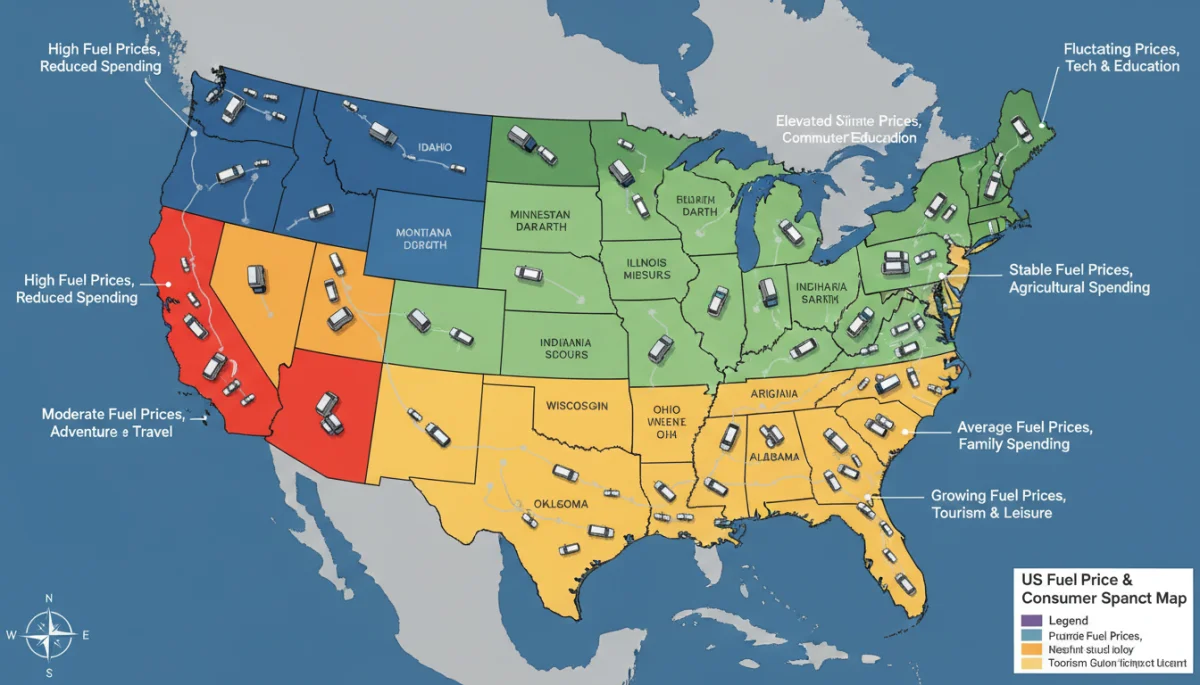
While the Department of Energy provides a national forecast, it is crucial to recognize that fuel prices rarely remain uniform across the United States. Regional variations are a persistent feature of the market, driven by a combination of local supply and demand dynamics, state-specific taxes, and differing transportation costs. The projected 5-10 cent fluctuation per gallon for 2026 will therefore manifest differently depending on where you live.
States with higher fuel taxes, such as California or Pennsylvania, typically see higher prices at the pump. Similarly, regions more distant from major refineries or import terminals often incur greater transportation costs, which are passed on to the consumer. These structural differences mean that while the national average might fluctuate within a narrow band, individual states or even cities could experience more significant swings.
Factors Driving Regional Price Discrepancies
Several factors contribute to these regional differences, making the national forecast a general guideline rather than a precise prediction for every locality.
- State and Local Taxes: Significant variations in gasoline and diesel taxes across states.
- Refinery Proximity: Regions closer to refineries often benefit from lower transportation costs.
- Environmental Regulations: Some states have stricter environmental rules requiring special fuel blends, which can be more expensive to produce.
- Seasonality: Demand for certain fuels, like winter-grade gasoline, can vary regionally and seasonally.
For consumers, understanding these regional disparities is vital for personal financial planning. A 5-10 cent fluctuation on a national average might translate to a larger or smaller impact depending on their specific location and driving habits. Businesses, particularly those reliant on transportation, must also factor in these regional nuances when forecasting operational costs for 2026.
The DOE’s analysis often includes regional breakdowns in its more detailed reports, highlighting areas that might be more susceptible to price volatility or sustained higher costs. This granular information helps to inform local policymakers and allows businesses to strategically plan their logistics and distribution networks. Ultimately, while the national outlook provides a broad picture, the localized experience of fuel prices will always be shaped by a unique confluence of factors.
| Key Trend | Brief Description |
|---|---|
| Price Fluctuation | DOE forecasts a 5-10 cent per gallon fluctuation for 2026. |
| Global Supply/Demand | Balance between OPEC+ production, U.S. shale, and emerging market demand. |
| Geopolitical Risks | Conflicts and political instability can cause rapid price spikes. |
| Policy Impact | Environmental regulations and EV incentives influence future fuel consumption. |
Frequently Asked Questions About 2026 Fuel Prices
The Department of Energy (DOE) forecasts a potential 5-10 cent per gallon fluctuation in average fuel prices across the United States for 2026. This projection reflects a complex interplay of global and domestic factors influencing the energy market.
Key factors include global crude oil supply and demand dynamics, geopolitical stability in oil-producing regions, the pace of global economic growth, evolving consumer behavior regarding vehicle choices, and the impact of environmental policies and regulations.
Geopolitical events, such as conflicts or political instability in major oil-producing regions or along critical shipping routes, can disrupt supply, create uncertainty, and lead to rapid, often significant, spikes in crude oil and subsequently, fuel prices.
Yes, the increasing adoption of electric vehicles, alongside improving fuel efficiency in conventional cars and growing public transportation use, is expected to gradually dampen demand for gasoline, contributing to the overall market dynamics that influence prices.
Regional price variations stem from differences in state and local taxes, proximity to refineries and import terminals (affecting transportation costs), and specific regional environmental regulations that may require unique and often more expensive fuel blends.
Conclusion
The Department of Energy’s forecast for 2026 fuel price trends, indicating a 5-10 cent per gallon fluctuation, underscores the inherent volatility and complexity of the global energy market. This projection is not merely a number but a reflection of a delicate balance between global supply and demand, the unpredictable nature of geopolitical events, the health of the world economy, and the accelerating shift towards cleaner energy alternatives. For individuals and businesses across the United States, understanding these multifaceted drivers is crucial for informed decision-making and strategic planning. While the future of fuel prices remains subject to a myriad of variables, the DOE’s comprehensive analysis provides a vital framework for navigating the economic landscape of 2026 and beyond, encouraging adaptability and foresight in our energy consumption habits.