STEM Education Evolution in US for 2026: Curricula & Opportunities
Anúncios
The evolution of STEM education in the US for 2026 is marked by a significant shift towards interdisciplinary curricula, early exposure to emerging technologies, and a heightened focus on real-world problem-solving to meet future workforce demands.
The landscape of education is constantly shifting, and nowhere is this more evident than in the realm of STEM. As we look towards 2026, the evolution of STEM education in the US is not merely about updating textbooks; it’s a fundamental reimagining of how science, technology, engineering, and mathematics are taught and learned. This transformation is driven by rapid technological advancements, evolving industry needs, and a growing understanding of effective pedagogical approaches, preparing students for a future that demands adaptability and innovative thinking.
Anúncios
The Digital Revolution and Curriculum Redesign
The pervasive influence of digital technologies has fundamentally reshaped educational paradigms, particularly within STEM. In 2026, curricula across the US are undergoing a significant redesign to integrate these advancements, moving beyond theoretical knowledge to practical application. This shift ensures students are not just consumers of technology but creators and innovators.
Educators are increasingly focusing on computational thinking and data literacy as foundational skills, recognizing their importance across all STEM disciplines. This involves teaching students how to approach problems like a computer scientist, breaking down complex issues into manageable steps, and understanding how to interpret and utilize vast amounts of data.
Integrating Artificial Intelligence and Machine Learning
Artificial Intelligence (AI) and Machine Learning (ML) are no longer futuristic concepts; they are integral components of modern industries. Consequently, STEM education in 2026 is seeing a robust integration of these fields, even at earlier educational stages. This includes introducing concepts of algorithms, neural networks, and ethical AI considerations.
Anúncios
- Early exposure to AI principles through interactive tools and age-appropriate projects.
- Development of specialized courses in AI ethics and societal impact.
- Hands-on experience with machine learning platforms and data analysis.
- Training educators to effectively teach complex AI concepts.
The goal is to demystify AI, making it accessible to a broader student population and fostering a generation comfortable with its capabilities and limitations. This proactive approach ensures American students are globally competitive in the rapidly advancing tech sector.
Cloud Computing and Cybersecurity in the Classroom
As businesses and daily life increasingly move to the cloud, understanding cloud computing architectures and robust cybersecurity practices becomes paramount. Schools are recognizing this need by incorporating cloud-based tools for collaboration and introducing cybersecurity fundamentals from middle school upwards.
Students are learning about network security, data protection, and common cyber threats, preparing them for roles in a world where digital safety is a critical concern. This practical education not only addresses a significant workforce demand but also equips students with essential digital citizenship skills. The emphasis is on proactive defense and understanding the vulnerabilities inherent in interconnected systems.
In conclusion, the digital revolution is not just a backdrop for STEM education but a driving force behind its evolution. Curriculum redesigns prioritize practical skills, critical thinking, and early exposure to cutting-edge technologies like AI, cloud computing, and cybersecurity, ensuring students are well-prepared for the challenges and opportunities of the 21st century.
Interdisciplinary Approaches and Collaborative Learning
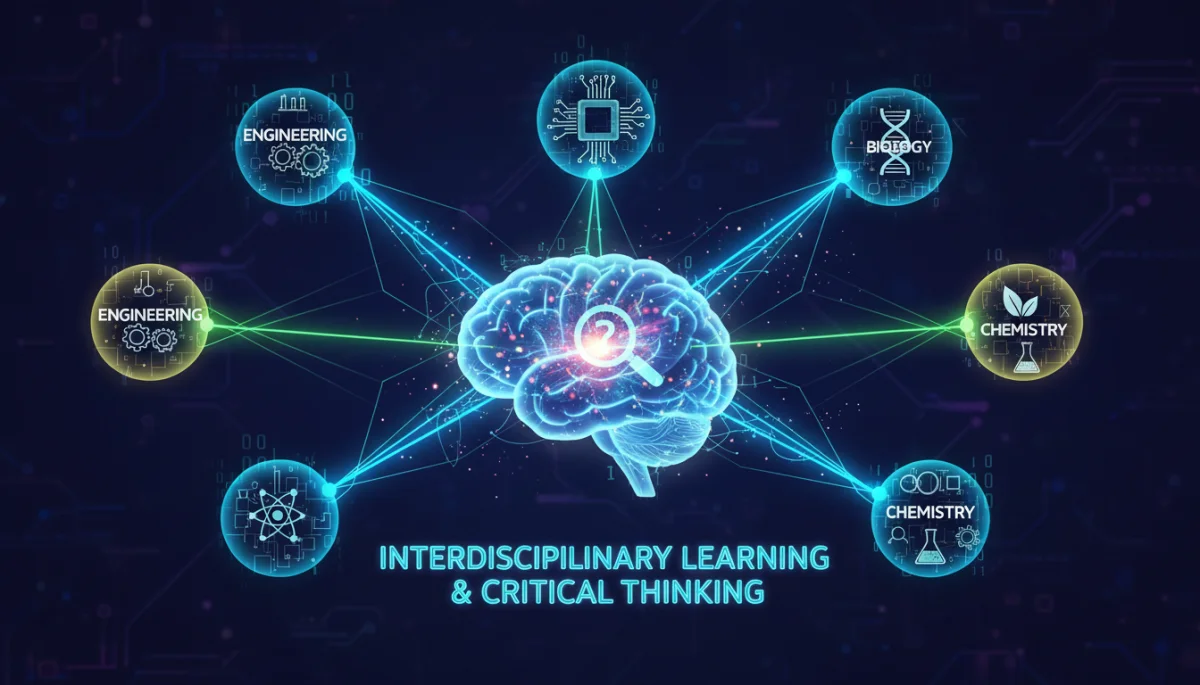
The complex challenges of the 21st century rarely fit neatly into single academic disciplines. Recognizing this, STEM education in the US for 2026 is heavily emphasizing interdisciplinary approaches and collaborative learning environments. This shift aims to mirror real-world problem-solving, where diverse perspectives and skills converge to find innovative solutions.
Traditional silos between subjects like biology, chemistry, physics, and computer science are breaking down. Instead, educators are designing projects and curricula that require students to draw upon knowledge from multiple fields simultaneously. For instance, a project might involve designing a sustainable urban farm, requiring knowledge of plant biology, engineering principles for irrigation, data science for yield optimization, and even economic modeling.
Project-Based Learning and Real-World Applications
Project-based learning (PBL) has become a cornerstone of this interdisciplinary movement. Rather than rote memorization, students engage in extended projects that tackle authentic problems, often in collaboration with local industries or community organizations. This approach fosters deeper understanding, critical thinking, and problem-solving skills.
- Students work in teams to solve open-ended challenges.
- Projects often involve community partners, providing real-world context.
- Emphasis on design thinking, iteration, and presentation of solutions.
- Assessment focuses on process, collaboration, and outcomes.
These hands-on experiences not only make learning more engaging but also help students connect classroom concepts to tangible applications, preparing them for the collaborative nature of modern workplaces. The ability to articulate and defend solutions, often to an external audience, also enhances communication skills.
Fostering Soft Skills for STEM Careers
While technical proficiency remains crucial, the evolving STEM landscape demands a strong foundation in ‘soft skills.’ Collaboration, communication, creativity, and critical thinking are increasingly valued by employers. Interdisciplinary projects naturally cultivate these attributes.
Working in diverse teams on complex problems requires students to negotiate, delegate, and communicate effectively. The open-ended nature of these projects also encourages creative problem-solving and adaptive thinking, preparing them for dynamic and unpredictable professional environments. The focus is on developing well-rounded individuals who can thrive in any professional setting.
In summary, the push for interdisciplinary and collaborative learning in STEM is transforming how students engage with complex subjects. By mimicking real-world scenarios through project-based learning and emphasizing crucial soft skills, education is preparing students not just for specific jobs, but for a future of continuous innovation and teamwork.
Early STEM Exposure and Pipeline Development
Building a robust STEM workforce for 2026 and beyond requires cultivating interest and foundational skills from an early age. The US education system is increasingly focused on providing early STEM exposure, ensuring a diverse and talented pipeline of future innovators and leaders.
Initiatives are being implemented across elementary and middle schools to introduce STEM concepts in engaging and age-appropriate ways. This often involves hands-on activities, playful exploration of scientific principles, and early exposure to computational thinking, debunking the myth that STEM is only for advanced learners.
K-12 STEM Initiatives and Partnerships
Numerous K-12 STEM initiatives are gaining traction, often facilitated through partnerships between schools, universities, and industry. These programs aim to spark curiosity and provide foundational knowledge before students reach higher education.
- After-school STEM clubs focusing on coding, robotics, and engineering challenges.
- Summer camps offering immersive experiences in various scientific fields.
- Mentorship programs connecting young students with STEM professionals.
- Curriculum integration of STEM concepts across all subjects, not just science class.
These initiatives are crucial for demystifying STEM fields and making them accessible and appealing to a broader range of students, including those from underrepresented groups. The goal is to build a positive association with STEM early on.
Addressing Equity and Diversity in STEM
A significant focus of early STEM exposure programs is to address long-standing issues of equity and diversity. Efforts are being made to ensure that all students, regardless of their socioeconomic background, gender, or ethnicity, have equal access to high-quality STEM education.
This includes providing resources to underserved communities, challenging stereotypes, and creating inclusive learning environments where every student feels empowered to pursue STEM. The long-term vision is a STEM workforce that truly reflects the diversity of the nation, bringing a wider array of perspectives to problem-solving. This focus on inclusion is not just about fairness, but about strengthening the entire STEM ecosystem.
In essence, the commitment to early STEM exposure and pipeline development is a strategic investment in the nation’s future. By igniting interest and providing equitable access from K-12, the US aims to build a diverse and skilled STEM workforce ready to tackle the challenges of 2026 and beyond.
Emerging Technologies and Specialized Skill Sets
As the technological landscape rapidly evolves, so too do the demands on the STEM workforce. For 2026, the focus is increasingly on specialized skill sets linked to emerging technologies, requiring educational institutions to adapt swiftly to prepare students for these new frontiers.
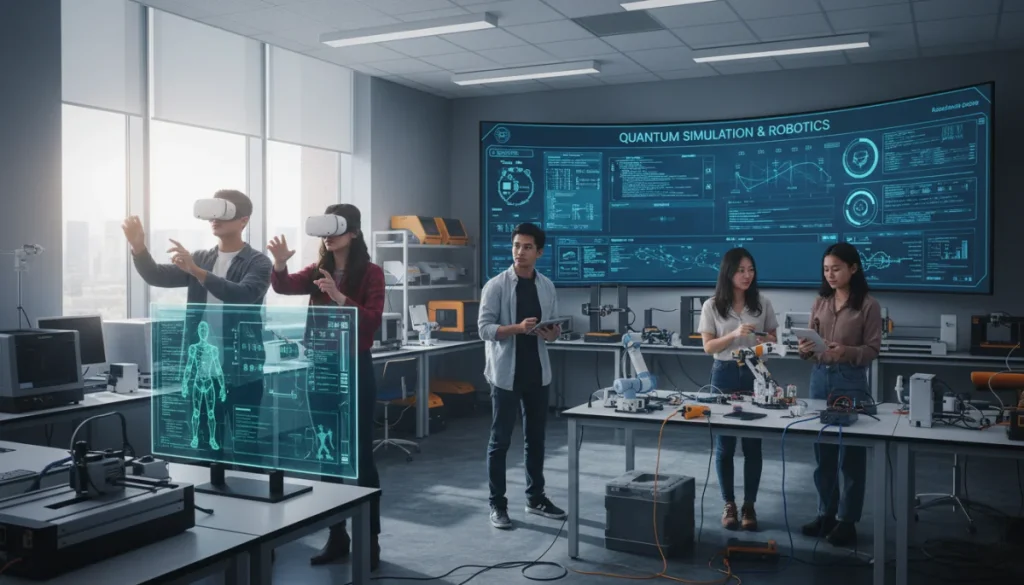
Universities and vocational schools are launching new programs and updating existing ones to reflect the latest advancements in fields such as quantum computing, biotechnology, and advanced manufacturing. This responsiveness is vital to ensure graduates possess the highly specific expertise sought by leading industries.
Quantum Computing and Data Science
Quantum computing, once a theoretical concept, is now on the cusp of practical application, creating a demand for specialists. Similarly, the explosion of data continues to fuel the need for skilled data scientists and analysts. Educational programs are responding by developing curricula in these cutting-edge areas.
- Introduction to quantum mechanics and quantum algorithms.
- Specialized degrees and certifications in data science and analytics.
- Focus on big data tools and machine learning frameworks.
- Ethical considerations in data privacy and quantum technology.
These specialized fields require a deep understanding of complex mathematical and computational principles, and universities are working to make these advanced topics accessible to a new generation of learners. The aim is to cultivate experts who can drive innovation in these transformative areas.
Biotechnology and Green Technologies
The biotechnology sector continues its rapid growth, driven by advancements in genomics, synthetic biology, and personalized medicine. Concurrently, the urgent need for sustainable solutions is propelling the development of green technologies, creating a wealth of new STEM opportunities.
Educational programs are focusing on areas like bioinformatics, gene editing technologies, and renewable energy systems. This includes not only the scientific principles but also the engineering and ethical implications of these powerful tools. Students are being prepared to contribute to innovations that address global health and environmental challenges.
In conclusion, the evolution of STEM education for 2026 is deeply intertwined with the emergence of new technologies. By offering specialized programs in areas like quantum computing, data science, biotechnology, and green technologies, the US educational system is proactively equipping students with the advanced skills necessary to lead in these rapidly expanding sectors.
The Role of Industry Partnerships and Apprenticeships
Closing the gap between academic learning and industry needs is paramount for the future of STEM. In 2026, industry partnerships and apprenticeship programs are playing an increasingly critical role in shaping STEM education, providing students with invaluable real-world experience and direct pathways to employment.
These collaborations allow educational institutions to stay current with industry demands, ensuring that curricula are relevant and skills taught are immediately applicable. For students, it means gaining practical experience, building professional networks, and often securing job offers before graduation.
Work-Based Learning and Internships
Work-based learning, including internships and co-op programs, has become a standard component of many STEM curricula. These experiences provide students with opportunities to apply theoretical knowledge in professional settings, develop critical workplace skills, and explore potential career paths.
- Structured internship programs with leading tech and science companies.
- Co-operative education models integrating academic study with paid work experience.
- Mentorship from industry professionals providing guidance and insights.
- Projects directly addressing company needs, offering tangible contributions.
Such programs are not just about gaining experience; they are about fostering a deeper understanding of industry culture and expectations. They also serve as a crucial bridge for students transitioning from academia to the professional world, often leading directly to full-time employment.
Expanding Apprenticeship Models
Beyond traditional internships, modern apprenticeship models are expanding significantly in STEM fields. These programs combine on-the-job training with related technical instruction, allowing individuals to earn wages while learning a skilled trade or profession.
Apprenticeships are particularly valuable for fields requiring highly specialized, hands-on skills, such as advanced manufacturing, cybersecurity operations, and IT infrastructure. They offer a direct and efficient route to skilled employment, benefiting both individuals seeking career entry and companies in need of trained talent.
Ultimately, industry partnerships and apprenticeships are vital components of the evolving STEM education landscape in 2026. By fostering strong connections between academia and the professional world, these initiatives ensure that students are not only well-educated but also job-ready, contributing directly to the nation’s economic and technological advancement.
Continuous Learning and Professional Development
The rapid pace of innovation in STEM fields means that initial education, however comprehensive, is only the beginning of a professional journey. In 2026, continuous learning and professional development are not just beneficial but essential for staying relevant and competitive in the STEM workforce.
Educational institutions, industry organizations, and online platforms are offering a wide array of opportunities for upskilling and reskilling. This commitment to lifelong learning ensures that professionals can adapt to new technologies, methodologies, and industry demands throughout their careers.
Micro-credentials and Online Learning Platforms
The rise of micro-credentials and specialized online learning platforms is transforming professional development. These flexible, accessible options allow individuals to acquire specific skills or certifications without committing to a full degree program.
- Short, focused courses on emerging technologies like blockchain or AI ethics.
- Certifications from industry leaders validating specialized competencies.
- Flexible online learning models accommodating working professionals.
- Badges and verifiable credentials for specific skill sets.
These programs are particularly attractive for professionals looking to quickly pivot to new areas, deepen their expertise, or demonstrate proficiency in niche technologies. They represent a democratizing force in education, making advanced learning more attainable for a broader audience.
Upskilling and Reskilling Initiatives
Governments and industries are increasingly investing in upskilling and reskilling initiatives to address talent gaps and ensure a robust workforce. These programs are designed to equip existing professionals with the new skills needed for evolving roles or entirely new career paths within STEM.
For example, a traditional engineer might reskill in data science, or an IT professional might upskill in cybersecurity. These initiatives are crucial for maintaining a competitive workforce and ensuring economic resilience in the face of rapid technological change. The focus is on adaptability and future-proofing careers.
In conclusion, continuous learning and professional development are fundamental pillars of STEM success in 2026. Through accessible micro-credentials, robust online platforms, and strategic upskilling initiatives, the educational ecosystem is supporting a culture of lifelong learning, ensuring that the STEM workforce remains dynamic, skilled, and prepared for future challenges.
| Key Aspect | Brief Description |
|---|---|
| Curriculum Redesign | Integration of AI, cloud computing, and cybersecurity from early stages. |
| Interdisciplinary Learning | Emphasis on project-based learning and soft skill development across subjects. |
| Early STEM Exposure | K-12 initiatives and diversity focus to build a strong talent pipeline. |
| Industry Partnerships | Crucial for work-based learning, internships, and apprenticeship programs. |
Frequently Asked Questions About STEM Education in 2026
The most significant changes include deeper integration of AI, machine learning, cloud computing, and cybersecurity. There’s also a strong move towards interdisciplinary, project-based learning that emphasizes real-world application and critical thinking over isolated subject knowledge.
K-12 improvements involve hands-on activities, robotics clubs, summer camps, and partnerships with industry professionals. A key focus is on making STEM accessible and engaging for all students, including underrepresented groups, to foster early interest and build a diverse talent pipeline.
Emerging opportunities are in fields like quantum computing, advanced AI development, specialized data science, bioinformatics, and green energy technologies. These roles require highly specialized skills cultivated through updated curricula and continuous professional development.
Industry partnerships are vital because they bridge the gap between academic theory and practical application. They provide students with internships, apprenticeships, and real-world project experience, ensuring that graduates possess the specific skills and knowledge demanded by employers.
Continuous learning is crucial for STEM professionals to remain relevant due to rapid technological advancements. Micro-credentials, online courses, and upskilling initiatives allow them to acquire new skills, adapt to evolving job roles, and stay competitive in dynamic industries throughout their careers.
Conclusion
The journey of STEM education in the US towards 2026 is one of dynamic adaptation and forward-thinking innovation. From integrating cutting-edge technologies like AI and quantum computing into curricula, to fostering interdisciplinary collaboration and ensuring equitable access from K-12, the focus is squarely on preparing a future-ready workforce. Strong industry partnerships and a commitment to lifelong learning underscore the understanding that education is an ongoing process. These comprehensive changes are not merely incremental adjustments but a fundamental reshaping of how we teach and learn STEM, aiming to empower a generation of problem-solvers and innovators capable of navigating and leading the complex challenges of tomorrow.