Student Loan Forgiveness 2026: Eligibility & Deadlines

Anúncios
Student loan forgiveness programs in 2026 are undergoing significant changes, impacting eligibility, application processes, and deadlines for borrowers seeking relief in the United States.
As we approach 2026, understanding the evolving landscape of student loan forgiveness 2026 programs is more critical than ever for millions of Americans. New eligibility criteria, revised application procedures, and crucial deadlines are on the horizon, making it imperative for borrowers to stay informed and proactive.
Anúncios
Understanding the current student loan forgiveness landscape
The federal government has continually adjusted its approach to student loan debt, with significant shifts anticipated for 2026. These changes aim to address the financial burden on borrowers while ensuring the sustainability of federal aid programs. It is essential to distinguish between various types of forgiveness and how they apply to different loan types.
Historically, student loan forgiveness has been offered through several avenues, each with specific requirements. These programs often target individuals working in public service, those facing financial hardship, or borrowers whose schools engaged in misconduct. The upcoming year will likely refine these categories, possibly introducing new opportunities or stricter guidelines.
Key federal forgiveness programs
- Public Service Loan Forgiveness (PSLF): Designed for individuals working full-time for qualifying non-profit organizations or government agencies.
- Income-Driven Repayment (IDR) Plans: Offer forgiveness of remaining loan balances after 20 or 25 years of payments, depending on the plan.
- Teacher Loan Forgiveness: Provides relief for educators who teach in low-income schools for a specified period.
- Borrower Defense to Repayment: For students who were defrauded by their schools.
Staying updated on these programs is vital, as even minor regulatory adjustments can have a substantial impact on a borrower’s eligibility and the amount of debt that can be forgiven. The Department of Education regularly publishes updates, and borrowers should consult official sources for the most accurate information.
In conclusion, the current student loan forgiveness landscape is dynamic and multifaceted. Borrowers must actively monitor federal announcements and understand the nuances of each program to determine the best path for their financial situation. Preparing for 2026 means being informed about these foundational programs.
Anúncios
New eligibility criteria for 2026 programs
The year 2026 is expected to bring forth revised eligibility criteria for several key student loan forgiveness programs. These changes are often a response to economic shifts, policy adjustments, and efforts to streamline the application process. Borrowers should pay close attention to any modifications that could affect their ability to qualify for relief.
One significant area of focus might be adjustments to income thresholds for income-driven repayment (IDR) plans, which are often a precursor to loan forgiveness. The government may also refine what constitutes a ‘qualifying’ payment or employment for programs like PSLF, potentially expanding or narrowing the pool of eligible individuals.
Potential changes to qualifying employment
For programs such as Public Service Loan Forgiveness, there could be clarifications or expansions regarding eligible employers. Historically, certain types of non-profits or government roles have been included, but future adjustments might consider a broader range of public service contributions. This could open doors for more individuals to pursue forgiveness.
- Expansion of eligible non-profit definitions.
- Inclusion of new public service roles, such as certain healthcare or community support positions.
- Stricter verification processes for employment records.
The emphasis on verifying employment records is likely to increase to prevent fraudulent claims and ensure that benefits are directed to those who genuinely qualify. Borrowers should begin compiling comprehensive records of their employment history, including pay stubs, W-2 forms, and employer certifications, to be prepared for any new requirements.
In summary, the new eligibility criteria for 2026 will likely aim for greater precision and fairness. Borrowers must proactively assess how these potential changes align with their personal and professional circumstances, ensuring they meet all updated requirements to maximize their chances of securing student loan forgiveness.
Crucial application deadlines and how to prepare
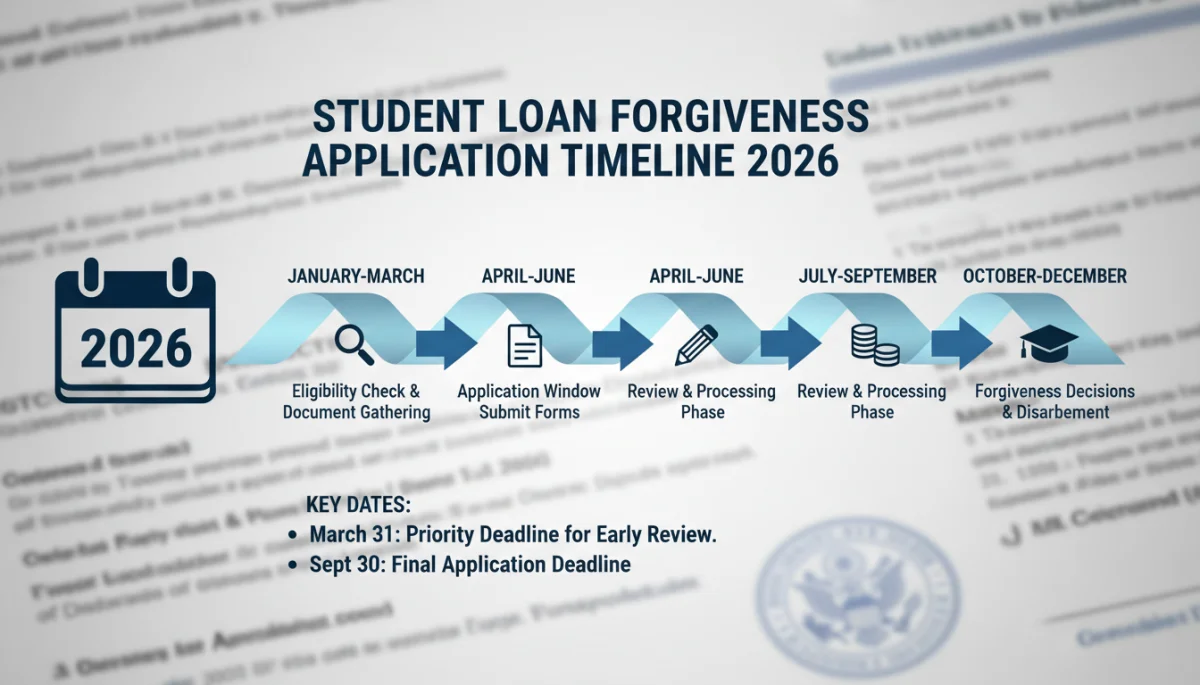
Navigating the application process for student loan forgiveness programs requires meticulous attention to deadlines. For 2026, several critical dates will emerge that borrowers cannot afford to miss. Missing a deadline can result in delayed forgiveness or even complete disqualification, underscoring the importance of early preparation.
The Department of Education typically announces these deadlines well in advance, often accompanied by detailed instructions. However, it is the borrower’s responsibility to track these announcements and submit all required documentation accurately and on time. Procrastination can be a costly mistake when it comes to financial relief.
Steps for timely application submission
- Monitor official announcements: Regularly check the Federal Student Aid website and reliable news sources for updates.
- Gather necessary documents: Collect income verification, employment certifications, and loan statements ahead of time.
- Complete forms carefully: Ensure all information is accurate and complete to avoid processing delays.
- Submit early: Aim to submit your application well before the official deadline to account for any unforeseen issues.
The application process often involves multiple forms and certifications, which can take time to complete and verify. For instance, PSLF requires annual employment certification, and IDR plans need income recertification. These ongoing requirements are just as important as the initial application.
In conclusion, preparing for crucial application deadlines in 2026 demands a proactive and organized approach. By staying informed, gathering documents early, and submitting applications meticulously, borrowers can significantly improve their chances of successfully navigating the student loan forgiveness process.
Impact of legislative changes on forgiveness programs
Legislative changes often serve as the primary drivers behind modifications to student loan forgiveness programs. The political climate and evolving economic priorities can lead to new laws or amendments that fundamentally alter how these programs operate. Understanding these legislative influences is key to anticipating future changes for 2026.
For example, new congressional acts could introduce entirely new forgiveness initiatives or modify existing ones, such as altering the duration of repayment periods or expanding the types of loans eligible for relief. Conversely, legislative action might also introduce stricter requirements or limit the scope of current programs.
Recent legislative developments
Recent years have seen debates around comprehensive student loan reform, with various proposals ranging from universal forgiveness to targeted relief. While some proposals gain traction, others may not pass, making it a complex environment for borrowers to predict outcomes. The outcome of elections and shifts in governmental priorities will heavily influence these decisions.
- Potential for new federal laws impacting loan interest rates.
- Discussions around expanding Pell Grant eligibility and its indirect effect on loan burden.
- Debates on the role of private lenders in federal loan programs.
Borrowers should recognize that legislative processes can be slow and unpredictable. Therefore, while it is important to be aware of potential changes, relying solely on hypothetical future legislation for forgiveness is not advisable. It is always best to work within the framework of currently established programs.
Ultimately, legislative changes have a profound impact on student loan forgiveness programs. Borrowers should remain vigilant about policy discussions and understand how new laws could shape their financial obligations and opportunities for relief in the coming years, particularly as we move into 2026.
Maximizing your chances for student loan forgiveness
For borrowers aiming to secure student loan forgiveness in 2026, strategic planning and informed decision-making are paramount. Simply meeting the basic eligibility criteria might not be enough; actively maximizing your chances involves understanding the nuances of each program and taking proactive steps.
One primary strategy is to ensure continuous compliance with program requirements. For instance, if you are pursuing PSLF, maintaining qualifying employment without gaps and submitting annual employment certifications are crucial. Any deviation could restart your progress or disqualify you.
Strategic tips for borrowers
- Consolidate eligible loans: Federal Direct Loans are often the most eligible. Consolidating other federal loans into a Direct Consolidation Loan can make them eligible for PSLF and certain IDR plans.
- Enroll in the correct IDR plan: Choose the IDR plan that offers the lowest monthly payment and the shortest path to forgiveness, based on your income and family size.
- Track all payments and employment: Maintain meticulous records of every payment made and every period of qualifying employment.
- Seek expert advice: Consult with a reputable financial advisor or student loan counselor to tailor a strategy to your specific situation.
Beyond federal programs, some states and employers offer their own loan repayment assistance programs. Exploring these options can provide additional avenues for relief, especially if federal programs do not fully meet your needs or if you have private student loans.
In conclusion, maximizing your chances for student loan forgiveness in 2026 requires more than just passive waiting. It involves a diligent and strategic approach, combining careful planning, continuous compliance, and leveraging all available resources to achieve your financial goals.
State-specific and employer-based forgiveness initiatives
While federal programs dominate the conversation around student loan forgiveness, it is important for borrowers to also consider state-specific and employer-based initiatives. These programs can offer valuable relief, often complementing federal options or providing alternatives for those who don’t fully qualify for national programs. The landscape for these initiatives is diverse and varies significantly by location and industry.
Many states, for example, have programs designed to attract professionals to high-need areas or specific professions, such as healthcare, teaching, or law enforcement within their borders. These often come with residency or service commitments, but the financial benefits can be substantial, sometimes even covering the entirety of a borrower’s remaining debt.
Exploring local and institutional programs
Employer-based programs are another often-overlooked resource. Some companies, particularly those in competitive industries or those seeking to retain top talent, offer student loan repayment assistance as part of their benefits package. These can range from direct contributions to loan principal to matching employee payments.
- Research state education departments: Look for loan repayment assistance programs (LRAPs) specific to your state or intended state of residence.
- Inquire with your employer: Check if your current or prospective employer offers any student loan repayment benefits or tuition assistance.
- Check professional organizations: Many professional associations offer grants or scholarships that can be used to pay down student debt.
The eligibility criteria for these programs are highly individualized. They might depend on your profession, where you live or work, your income level, and the type of loans you hold. It’s crucial to thoroughly research each program’s requirements and application process, as they can differ significantly from federal guidelines.
To conclude, exploring state-specific and employer-based forgiveness initiatives can significantly broaden a borrower’s options for debt relief. These programs represent an important, often localized, layer of support that can provide tailored solutions beyond federal offerings, making it worthwhile to investigate all available avenues for student loan forgiveness in 2026.
The future outlook for student loan forgiveness beyond 2026
Looking beyond 2026, the future of student loan forgiveness remains a topic of considerable debate and potential change. The ongoing discussions about higher education costs, economic equity, and federal fiscal responsibility suggest that policy adjustments will continue to evolve. Borrowers should anticipate a dynamic environment rather than a static one.
One major factor influencing the long-term outlook is the political landscape. Depending on future administrations and congressional compositions, there could be further pushes for broad-based forgiveness, or conversely, a stricter approach to federal student aid. Economic conditions, such as inflation and employment rates, will also play a role in shaping policy decisions.
Long-term trends and predictions
- Increased focus on targeted relief: Future programs might increasingly target specific groups, such as low-income borrowers or those in critical public service roles, rather than offering universal forgiveness.
- Emphasis on affordability: There could be a greater push for policies that address college affordability upfront, reducing the need for extensive forgiveness programs in the future.
- Technological integration: The application and management of loan forgiveness programs may become more digitized, offering streamlined processes but potentially requiring greater digital literacy from applicants.
The Department of Education is also continuously evaluating the effectiveness and efficiency of existing programs. This ongoing assessment could lead to further refinements, consolidations, or even the creation of entirely new initiatives designed to better serve borrowers and the national economy.
In conclusion, the future outlook for student loan forgiveness beyond 2026 is one of continued evolution. Borrowers should remain adaptable and informed, understanding that the landscape of debt relief is subject to ongoing policy and economic shifts. Proactive engagement with official sources will be essential for navigating these changes successfully.
| Key Program | Brief Description |
|---|---|
| PSLF | Forgiveness for full-time public service employees after 120 qualifying payments. |
| IDR Plans | Forgiveness of remaining balances after 20-25 years of income-driven payments. |
| Teacher Loan Forgiveness | Up to $17,500 in forgiveness for eligible teachers in low-income schools. |
| Borrower Defense | Relief for students defrauded by their educational institutions. |
Frequently asked questions about student loan forgiveness in 2026
Anticipated changes for 2026 include revised eligibility criteria for federal programs like PSLF and IDR plans, adjustments to income thresholds, and potentially new application procedures. Borrowers should expect more refined guidelines and a continued focus on targeted relief for specific professions or financial situations.
To check PSLF eligibility, you must be employed full-time by a qualifying government agency or non-profit organization. The best way to confirm is by submitting an Employment Certification Form (ECF) annually, which the Department of Education uses to verify your employer and track qualifying payments.
Generally, private student loans are not eligible for federal student loan forgiveness programs. Federal programs exclusively apply to federal student loans. However, some state or employer-based programs might offer assistance for private loans, so it’s worth exploring all available options.
The most crucial step is to stay informed about official announcements from the Department of Education and to meticulously gather all required documentation. Submitting accurate and complete applications well before deadlines is essential to avoid delays or disqualification from any student loan forgiveness program.
While specific new programs are not guaranteed, ongoing legislative discussions and economic factors suggest potential for adjustments or entirely new initiatives. These changes often focus on targeted relief or improving existing frameworks. Borrowers should monitor policy developments closely for any emerging opportunities.
Conclusion
The landscape of student loan forgiveness programs for 2026 is poised for significant evolution, presenting both challenges and opportunities for borrowers across the United States. Staying informed about new eligibility criteria, understanding crucial application deadlines, and actively exploring all available federal, state, and employer-based initiatives are critical steps. By adopting a proactive and informed approach, borrowers can navigate these changes effectively, maximizing their potential for debt relief and achieving greater financial stability in the years to come.