Cybersecurity Alert: 7 New Threats to Financial Data in Early 2026
Anúncios
Early 2026 brings a wave of sophisticated cybersecurity threats specifically targeting personal financial data, demanding immediate awareness and proactive protective measures from individuals and institutions alike.
Anúncios
The digital landscape is constantly evolving, and with it, the methods employed by cybercriminals. A critical cybersecurity alert: 7 new threats emerging in early 2026 targeting personal financial data (TIME-SENSITIVE) demands our immediate attention. As we navigate the complexities of our increasingly connected lives, understanding these emerging dangers is not just advisable, but absolutely essential for safeguarding our financial well-being.
The evolving landscape of financial cyber threats
The year 2026 is ushering in a new era of digital vulnerabilities, particularly concerning personal financial data. Cybercriminals are refining their tactics, moving beyond traditional phishing to more insidious and personalized attacks. This section explores the broader trends shaping these new threats.
The sheer volume of personal and financial information stored online makes individuals prime targets. From banking details to investment portfolios, virtually every aspect of our financial lives is now digitally accessible, creating a fertile ground for exploitation. The increasing integration of AI into everyday applications also presents new avenues for attackers to leverage.
AI-powered social engineering
One significant evolution is the use of artificial intelligence to craft highly convincing social engineering attacks. Unlike generic phishing emails, these AI-generated scams can mimic communication styles, language patterns, and even voices of trusted contacts, making them incredibly difficult to detect.
Anúncios
- Personalized phishing emails: AI analyzes public data to create highly targeted messages.
- Deepfake voice calls: Criminals use AI to simulate voices of family or colleagues for urgent requests.
- Chatbot impersonations: Malicious chatbots mimic customer service to extract sensitive information.
The sophistication of these AI-driven attacks means that traditional security awareness training may no longer be sufficient. Individuals must develop a more critical eye and ear for digital communications, verifying requests through alternative, trusted channels before acting.
In conclusion, the threat landscape for financial data is becoming more complex and personalized. The integration of AI into attack methodologies marks a significant shift, requiring both individuals and financial institutions to adopt more advanced defense mechanisms and a heightened sense of vigilance.
Threat 1: advanced polymorphic malware targeting mobile banking
Mobile banking applications have become indispensable for managing finances, yet they are increasingly under siege from sophisticated malware. Early 2026 has seen the rise of advanced polymorphic malware specifically designed to evade detection and compromise mobile financial transactions.
This new generation of malware changes its code signature frequently, making it difficult for traditional antivirus software to identify and neutralize. It often disguises itself as legitimate apps or updates, tricking users into granting it permissions that allow it to intercept sensitive financial data, including login credentials and transaction details.
How polymorphic malware operates
Polymorphic malware employs intricate algorithms to alter its internal structure while retaining its core malicious functionality. This constant mutation allows it to bypass signature-based detection systems, which rely on identifying known malware patterns.
- Code mutation: The malware continuously rewrites parts of its code.
- Obfuscation techniques: It uses various methods to hide its true purpose from analysis tools.
- Dynamic payload delivery: Malicious code is often downloaded in stages, making initial detection harder.
Once installed, this malware can operate silently in the background, monitoring banking app activity, logging keystrokes, and even initiating unauthorized transactions. Users may not even realize their device is compromised until they notice discrepancies in their financial statements.
Protecting against this threat requires more than just a good antivirus. Users need to be extremely cautious about app downloads, only using official app stores, and scrutinizing permissions requested by applications. Regularly updating mobile operating systems and banking apps is also crucial, as these updates often include security patches against newly identified vulnerabilities. The challenge lies in staying one step ahead of these rapidly evolving threats.
Threat 2: quantum-resistant encryption bypass attempts
As the world edges closer to practical quantum computing, cybercriminals are already exploring methods to undermine current encryption standards. Early 2026 has revealed nascent attempts to develop techniques capable of bypassing even quantum-resistant encryption, posing a long-term, yet urgent, threat to financial data security.
While fully functional quantum computers capable of breaking modern encryption are still some years away, the mere possibility is driving malicious actors to innovate. These early attempts focus on identifying weaknesses in the implementation of post-quantum cryptographic algorithms or exploiting side-channel attacks that could compromise data even if the core encryption remains strong.
The future of cryptographic attacks
The theoretical power of quantum computers lies in their ability to solve complex mathematical problems far faster than classical computers, including those underpinning current public-key cryptography. This has led to the development of quantum-resistant algorithms, but their deployment is gradual, and their robustness is under constant scrutiny.
- Algorithm implementation flaws: Exploiting errors in how quantum-resistant algorithms are coded.
- Side-channel attacks: Extracting cryptographic keys by observing physical characteristics like power consumption or electromagnetic emissions.
- Hybrid attacks: Combining classical and quantum computing techniques to reduce attack complexity.
Financial institutions are in a race against time to transition to quantum-safe encryption. However, the complexity of this transition, coupled with the need for interoperability across systems, creates potential vulnerabilities that sophisticated attackers are keen to exploit. Individuals, while less directly exposed to this specific threat, benefit from institutions adopting robust, forward-looking security protocols.
Ultimately, the emergence of quantum-resistant encryption bypass attempts underscores the perpetual cat-and-mouse game between cybersecurity defenders and attackers. It highlights the need for continuous research, development, and rapid deployment of advanced cryptographic solutions to protect financial data against future computational capabilities.
Threat 3: supply chain attacks on financial software vendors
The interconnected nature of the digital ecosystem means that a vulnerability in one component can compromise an entire system. In early 2026, there’s a heightened risk of supply chain attacks specifically targeting financial software vendors, making them a conduit for widespread data breaches.
These attacks involve injecting malicious code into legitimate software during its development or distribution phase. When financial institutions or individual users install or update this compromised software, the malware gains access to their systems, potentially leading to the exfiltration of sensitive financial data or the deployment of ransomware.
Vulnerabilities in the software supply chain
The software supply chain is complex, involving numerous third-party components, libraries, and development tools. Each link in this chain represents a potential entry point for attackers, making it a lucrative target for those seeking to compromise many systems simultaneously.
- Compromised development environments: Attackers gain access to a vendor’s internal systems.
- Malicious software updates: Legitimate updates are tampered with to include malware.
- Third-party component vulnerabilities: Exploiting weaknesses in widely used open-source libraries.
The impact of such an attack can be catastrophic, affecting numerous financial institutions and their customers simultaneously. Detecting these sophisticated intrusions requires advanced threat intelligence and rigorous vetting processes for all software components. Financial institutions must implement stringent security audits for their vendors and maintain strong internal security postures to mitigate these risks.
In essence, protecting against supply chain attacks demands a holistic approach to security, extending beyond an organization’s perimeter to encompass every entity involved in the development and delivery of critical software. Vigilance and robust security practices across the entire ecosystem are paramount to safeguarding financial data.
Threat 4: sophisticated credential stuffing and account takeover
Credential stuffing, a technique where stolen username and password pairs from one breach are used to gain unauthorized access to accounts on other services, continues to evolve. In early 2026, we are seeing more sophisticated forms of credential stuffing leading to widespread account takeovers, specifically targeting financial platforms.
Attackers are leveraging advanced bot networks and AI-driven tools to automate these attempts at an unprecedented scale, making it harder for security systems to distinguish between legitimate and malicious login attempts. The goal is to gain access to bank accounts, credit card portals, and investment platforms.
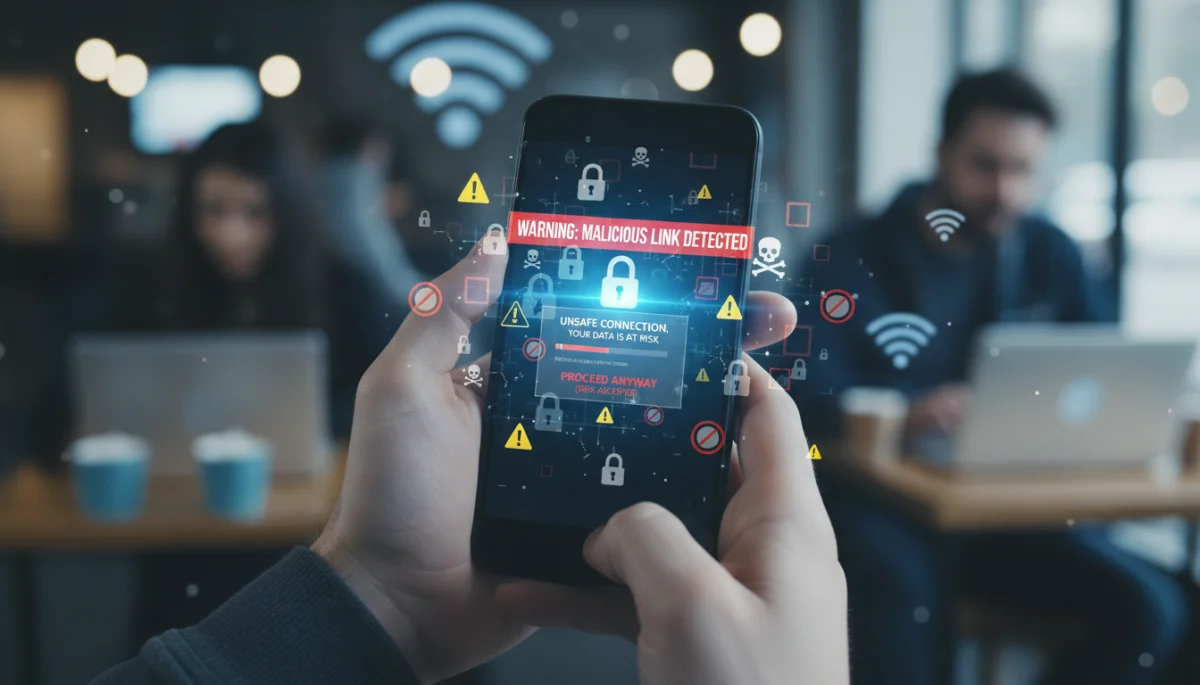
The sheer volume of stolen credentials available on the dark web fuels these attacks. Users often reuse passwords across multiple services, inadvertently providing criminals with the keys to their financial kingdom once one service is breached. This practice creates a significant vulnerability that attackers are keen to exploit.
Mitigating account takeover risks
Combating sophisticated credential stuffing requires a multi-layered approach from both users and financial institutions. Strong password policies and multi-factor authentication (MFA) are no longer optional but essential safeguards.
- Unique, strong passwords: Use different, complex passwords for each online account.
- Multi-factor authentication (MFA): Enable MFA wherever possible, especially for financial accounts.
- Behavioral analytics: Financial institutions employ AI to detect unusual login patterns or transaction behaviors.
For individuals, the onus is on adopting robust password hygiene and enabling MFA on all critical accounts. For institutions, implementing advanced behavioral analytics and real-time fraud detection systems is crucial to identify and block suspicious login attempts before an account takeover occurs. Continuous monitoring and rapid response capabilities are vital in this ongoing battle.
Ultimately, the fight against sophisticated credential stuffing and account takeover is a shared responsibility. Users must practice good security habits, and financial institutions must deploy cutting-edge technologies to protect their customers’ financial data from these persistent threats.
Threat 5: invoice fraud and business email compromise (BEC) evolution
Business Email Compromise (BEC) and invoice fraud remain highly effective tactics for cybercriminals, and in early 2026, these schemes are becoming even more sophisticated. Attackers are refining their social engineering techniques, making it incredibly difficult for individuals and businesses to distinguish legitimate payment requests from fraudulent ones.
These evolving threats often involve extensive reconnaissance, where criminals meticulously study an organization’s communication patterns, key personnel, and vendor relationships. They then craft highly convincing emails, impersonating executives or trusted suppliers, requesting urgent wire transfers or changes to payment details, all aimed at diverting funds to their accounts.
The art of deception in BEC attacks
The success of modern BEC and invoice fraud lies in the attacker’s ability to perfectly mimic legitimate correspondence. This goes beyond simple spoofing and often involves compromising actual email accounts or creating highly convincing lookalike domains.
- Executive impersonation: Emails appearing to come from a CEO or CFO demanding urgent action.
- Vendor email compromise: Attackers gain access to a vendor’s email system to send fraudulent invoices.
- Lawyer impersonation: False legal requests for payments, often with a sense of urgency.
The financial impact of these attacks can be devastating for businesses, leading to significant monetary losses and reputational damage. For individuals, similar tactics can be used to trick them into paying fake invoices or transferring funds under false pretenses. Robust internal controls, employee training, and verification protocols are essential defenses.
In summary, the evolution of invoice fraud and BEC demands heightened vigilance and a culture of skepticism regarding financial requests, especially those communicated via email. Implementing multi-factor authentication for email accounts and establishing clear, multi-step verification processes for all financial transactions are critical steps to prevent these costly deceptions.
Threat 6: data poisoning in AI-driven financial services
As financial services increasingly rely on artificial intelligence for fraud detection, credit scoring, and personalized advice, a new and insidious threat has emerged in early 2026: data poisoning. This involves malicious actors corrupting the data used to train AI models, leading to skewed outcomes that can benefit criminals or disadvantage individuals.
Data poisoning attacks can subtly manipulate AI algorithms over time, causing them to misclassify fraudulent transactions as legitimate, incorrectly assess creditworthiness, or even recommend risky investments. The insidious nature of these attacks makes them difficult to detect, as the AI continues to function, but with a compromised internal logic.
How AI models are compromised
AI models learn from vast datasets. If these datasets are infiltrated and manipulated, the AI will learn from the corrupted information, leading to biased or inaccurate decision-making. This can have profound implications for financial integrity and fairness.
- Injecting false transaction data: Training AI to ignore certain types of fraudulent activity.
- Manipulating credit histories: Falsely improving or degrading credit scores through data input.
- Biasing investment recommendations: Steering AI towards specific, potentially harmful, investment choices.
The consequences of data poisoning can extend beyond financial loss, impacting an individual’s financial reputation and access to services. Financial institutions must implement rigorous data validation processes, secure their data pipelines, and develop robust anomaly detection systems to identify and mitigate data poisoning attempts. Regular auditing of AI model performance and transparency in AI decision-making are also crucial.
Ultimately, safeguarding the integrity of AI-driven financial services against data poisoning is paramount. It requires a proactive approach to data security, ensuring that the foundational information upon which AI models operate remains untainted and reliable, thereby protecting both institutions and their customers.
Threat 7: ransomware 2.0 with data exfiltration and extortion
Ransomware has evolved beyond simply encrypting data and demanding payment for its release. In early 2026, we are witnessing the rise of ‘Ransomware 2.0,’ which incorporates data exfiltration and multi-layered extortion tactics. This new iteration significantly increases the pressure on victims to pay, as their sensitive financial data is not only encrypted but also stolen and threatened with public release.
Attackers now combine the traditional encryption of files with the exfiltration of sensitive information, such as customer financial records, intellectual property, and personal identifying information. If the initial ransom for decryption isn’t paid, criminals threaten to publish the stolen data on the dark web or sell it to other malicious actors, adding a severe reputational and legal risk to the financial burden.
The dual threat of ransomware 2.0
This dual approach makes Ransomware 2.0 particularly devastating. Victims face not only operational disruption but also the potential for massive regulatory fines, lawsuits from affected individuals, and severe damage to their brand.
- Double extortion: Encrypting data and threatening to publish stolen data.
- Triple extortion: Adding DDoS attacks or direct harassment of customers/partners.
- Targeted data exfiltration: Specifically seeking out highly sensitive financial or personal data.
For individuals, this could mean their bank account details, investment portfolios, or credit card information being exposed. For financial institutions, the stakes are even higher, with the potential for widespread data breaches impacting thousands or millions of customers. Robust data backup strategies, strong network segmentation, and advanced endpoint detection and response (EDR) solutions are critical for defense.
In conclusion, Ransomware 2.0 represents a significant escalation in cyber threats, turning a data loss event into a full-blown crisis involving privacy, reputation, and legal compliance. Proactive cybersecurity measures, including incident response planning and regular security audits, are more vital than ever to mitigate the devastating impact of these sophisticated attacks.
| Threat Category | Brief Description |
|---|---|
| Polymorphic Mobile Malware | Malware that constantly changes its code to evade detection, targeting mobile banking apps. |
| Quantum Encryption Bypass | Early attempts to undermine quantum-resistant encryption, a future threat to data security. |
| Supply Chain Attacks | Injecting malicious code into legitimate financial software during development or distribution. |
| Ransomware 2.0 | Encrypts data and exfiltrates it, threatening public release for double or triple extortion. |
Frequently asked questions about 2026 financial cybersecurity
Polymorphic malware constantly changes its code signature to avoid detection by antivirus software. It can infiltrate your mobile device, often disguised as legitimate apps, to steal banking credentials and intercept transactions. Always download apps from official stores and be wary of unusual app permissions.
While full quantum computers are not yet mainstream, cybercriminals are already probing for weaknesses in quantum-resistant encryption implementations. This is a long-term concern for financial institutions, who are working to upgrade their systems. Individuals should ensure their banks are adopting the latest security standards.
Supply chain attacks involve malicious code being injected into legitimate software before it reaches you. If your bank or financial app uses compromised software, your data could be at risk. This highlights the importance of financial institutions rigorously vetting their software vendors and maintaining strong security.
The most effective defenses are using unique, strong passwords for every online account and enabling multi-factor authentication (MFA) wherever possible. MFA adds an extra layer of security, making it significantly harder for attackers to access your accounts even if they have your password.
Ransomware 2.0 not only encrypts your data but also steals it. If you don’t pay the ransom for decryption, criminals threaten to publish or sell your sensitive information, leading to double or even triple extortion. This adds significant reputational and legal risks to the financial burden.
Conclusion
The landscape of cybersecurity threats targeting personal financial data is undergoing a rapid and concerning evolution in early 2026. From AI-powered social engineering to sophisticated polymorphic malware and the insidious dual threats of Ransomware 2.0, individuals and institutions face an increasingly complex challenge. Staying informed about these emerging dangers is the first step, but proactive measures are equally crucial. Adopting strong password hygiene, enabling multi-factor authentication, exercising extreme caution with unsolicited communications, and ensuring all software is updated are not merely recommendations but essential practices for safeguarding our financial lives in this new digital era. Continuous vigilance and adaptability will be key to protecting ourselves against these ever-advancing threats.