2026 Federally Funded Child Care Benefits: Up to 30% Savings?

Anúncios
New federally funded child care benefits for 2026 could offer eligible families significant savings, potentially up to 30%, by expanding access and affordability to quality child care services.
Are you a parent juggling work and the ever-increasing cost of child care? The prospect of new federally funded child care benefits 2026 offers a beacon of hope for families across the United States. This initiative aims to alleviate financial burdens, potentially saving eligible households up to 30% on child care expenses. Understanding these upcoming changes is crucial for planning your family’s future.
Anúncios
Understanding the 2026 Federal Child Care Initiative
The federal government is set to roll out significant enhancements to child care support programs in 2026. These initiatives are designed to make quality child care more affordable and accessible for working families, recognizing the critical role it plays in economic stability and child development. The goal is to address the long-standing challenges of high costs and limited availability that many parents face daily.
This comprehensive approach moves beyond incremental changes, seeking to create a more robust and equitable child care system nationwide. It acknowledges that child care is not just a family issue but a national economic imperative, impacting workforce participation and long-term societal well-being.
The driving force behind federal involvement
The impetus for these new benefits stems from years of advocacy and research highlighting the immense financial strain child care places on families. Many households spend a significant portion of their income on child care, often exceeding housing or college tuition costs. The federal government’s intervention aims to:
- Reduce out-of-pocket expenses for eligible families.
- Increase the supply of high-quality child care options.
- Support child care providers with better funding and resources.
- Boost workforce participation, especially among women.
In conclusion, the 2026 federal child care initiative represents a pivotal shift in how the nation addresses family support. It seeks to provide tangible relief and create a more sustainable environment for both parents and child care providers, fostering a stronger foundation for the next generation.
Anúncios
Who is Eligible for the New Benefits?
Determining eligibility for the 2026 federally funded child care benefits is a key step for families hoping to access these savings. While specific criteria are still being finalized, the general framework focuses on income levels, employment status, and the age of the children requiring care. These benefits are primarily aimed at supporting low to middle-income families, ensuring that those who need assistance most can receive it.
The government’s intention is to cast a wide net, ensuring that a substantial portion of working families can benefit. This inclusive approach aims to prevent situations where families are just above an income threshold and thus ineligible, despite still facing significant financial strain.
Income and household size considerations
Eligibility will likely be tied to a percentage of the state’s median income (SMI) or the federal poverty level (FPL), adjusted for household size. This means that a family’s total income, along with the number of dependents, will be crucial factors. There will likely be tiered support, where lower-income families receive a higher percentage of assistance.
For instance, a family earning 85% of the SMI might qualify for the maximum subsidy, while a family earning 150% of the SMI might receive a partial benefit. Documentation such as tax returns, pay stubs, and household composition details will be required to verify eligibility. It is advisable to start gathering these documents in advance to streamline the application process once it opens.
Ultimately, the eligibility criteria for the 2026 benefits are designed to be comprehensive and fair, targeting families who face the greatest challenges in affording quality child care. Understanding these parameters early will allow families to prepare and apply effectively.
Potential Savings: Up to 30% Explained
The promise of up to 30% savings on child care costs is a significant incentive for families. This percentage represents a substantial reduction in what is often one of the largest household expenses. These savings can free up considerable financial resources, allowing families to invest in other necessities, save for the future, or improve their overall quality of life.
Achieving a 30% reduction can translate into thousands of dollars annually for many families, depending on their current child care expenditures and the number of children in care. This level of support is transformative, moving beyond merely offsetting costs to genuinely enhancing financial stability.
How the savings will be implemented
The mechanism for realizing these savings could take several forms, potentially combining direct subsidies, tax credits, or vouchers. Direct subsidies would likely be paid directly to child care providers on behalf of eligible families, reducing the out-of-pocket tuition. Tax credits, on the other hand, would allow families to claim a portion of their child care expenses when filing their federal taxes.
Vouchers offer flexibility, empowering parents to choose their preferred child care provider, whether it’s a center, home-based care, or a relative, as long as the provider meets certain quality standards. It’s also possible that a hybrid model will be adopted, leveraging the strengths of each approach to maximize impact and flexibility. 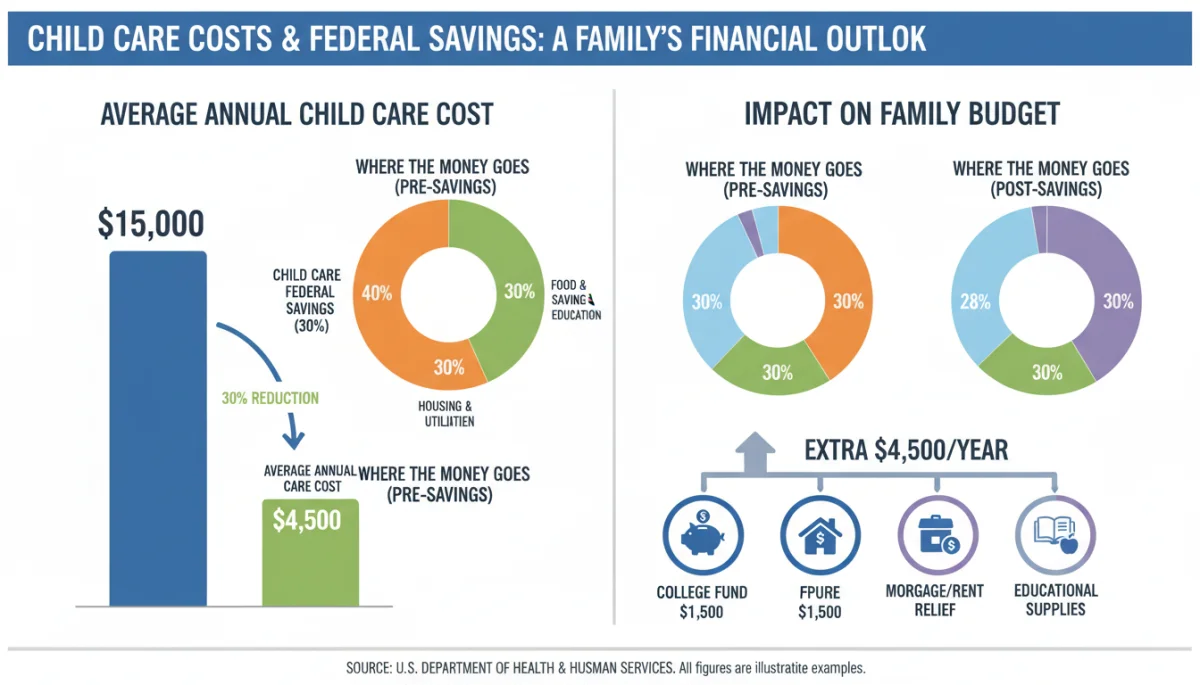
The exact implementation details will be critical, as they will dictate how easily families can access and benefit from these savings. The government aims for a streamlined process to ensure widespread adoption and impact.
In summary, the potential for up to 30% savings is a game-changer for many American families, offering much-needed financial relief and greater access to quality child care. Understanding the various ways these savings might be delivered will be essential for maximizing their benefit.
Practical Solutions for Accessing Benefits
Navigating new government programs can often feel overwhelming, but preparing in advance can simplify the process of accessing the 2026 federally funded child care benefits. Practical steps include gathering necessary documentation, understanding application timelines, and identifying eligible child care providers. Early preparation ensures that families are ready to apply as soon as the programs become available.
Being proactive is key to securing these benefits. Families who understand the requirements and have their paperwork in order will be better positioned to receive assistance without delays.
Key steps for families
- Gather financial documents: Collect recent tax returns, pay stubs, and any other income verification documents. These will be essential for proving eligibility based on income thresholds.
- Identify eligible providers: Research child care centers, home-based care, and other providers in your area that are likely to participate in federal programs. Ensure they meet quality and licensing standards.
- Stay informed: Follow updates from federal and state agencies, as well as local child care resource and referral agencies. These organizations will provide the most current information on application windows and requirements.
- Prepare for enrollment: Once applications open, be ready to complete forms accurately and submit all required supporting documentation promptly.
By taking these practical steps, families can significantly ease their journey through the application process and increase their chances of securing the valuable child care benefits. Proactive engagement with the program’s requirements will be a significant advantage.
Impact on Child Care Providers and the Economy
The new federally funded child care benefits for 2026 are not just beneficial for families; they also promise to have a profound impact on child care providers and the broader economy. Increased funding and demand will likely lead to better wages for child care workers, improved facility infrastructure, and an overall enhancement in the quality of care provided. This systemic uplift benefits everyone involved.
When child care providers are better supported, they can offer more stable and enriching environments for children, which in turn supports parents’ ability to work and contribute to the economy. It creates a virtuous cycle of investment and growth.
Strengthening the child care sector
With a stable source of federal funding, child care centers and home-based providers can invest in critical areas such as staff training, curriculum development, and facility upgrades. This will help address the chronic underfunding that has plagued the sector for years. Higher wages and better benefits for child care workers can attract and retain qualified professionals, reducing turnover and improving consistency of care.
Economically, accessible child care enables more parents, particularly mothers, to participate fully in the workforce. This boosts productivity, increases consumer spending, and contributes to a stronger national economy. It also reduces reliance on public assistance programs by allowing families to achieve greater financial independence.
In conclusion, the 2026 federal child care benefits represent a strategic investment in both human capital and economic growth. By strengthening the child care sector, the initiative supports families, empowers workers, and ultimately contributes to a more prosperous society.
Long-Term Outlook and Future Considerations
Looking beyond 2026, the long-term outlook for federally funded child care benefits suggests a sustained commitment to supporting families and the child care sector. This initial rollout is expected to lay the groundwork for future expansions and refinements, adapting to the evolving needs of American families and economic conditions. The aim is to build a resilient and responsive system.
Continued federal investment can foster innovation within the child care industry, encouraging new models of care and greater flexibility for parents. It also signals a recognition that child care is a fundamental component of national infrastructure, much like education or healthcare.
Potential for program evolution
As the program matures, there may be adjustments to eligibility criteria, benefit amounts, and funding mechanisms based on initial outcomes and feedback. The government will likely monitor the impact on child care affordability, quality, and workforce participation to fine-tune the initiative. There could also be increased emphasis on specific populations, such as families with children with special needs, or those in rural areas with limited access to care.
Furthermore, technological advancements might play a role in streamlining application processes and connecting families with providers more efficiently. The ongoing dialogue between policymakers, child care advocates, and families will be crucial in shaping the future trajectory of these vital benefits.
The long-term vision is a child care system that is not only affordable and accessible but also high-quality and sustainable, ensuring that every child has the opportunity to thrive and every parent can pursue their professional goals without undue financial stress.
| Key Point | Brief Description |
|---|---|
| New Federal Benefits | Significant federally funded child care benefits launching in 2026. |
| Eligibility Criteria | Primarily for low to middle-income families, based on income and household size. |
| Potential Savings | Families could save up to 30% on child care costs through subsidies or tax credits. |
| Economic Impact | Strengthens child care sector, boosts workforce participation, and aids economic growth. |
Frequently Asked Questions About 2026 Child Care Benefits
These are new government programs starting in 2026 aimed at making child care more affordable and accessible. They include potential subsidies, tax credits, or vouchers to reduce families’ out-of-pocket expenses for quality child care services across the United States.
Eligibility will primarily be based on your household income relative to your state’s median income or the federal poverty level, adjusted for family size. You will likely need to provide financial documents such as tax returns and pay stubs to verify your income and household composition.
Eligible families could see savings of up to 30% on their child care costs. The exact percentage may vary depending on your income level and the specific benefit structure implemented, whether it’s through direct payments to providers, tax relief, or a voucher system.
Application details will be released closer to 2026. It’s recommended to stay informed through federal and state government websites, as well as local child care resource agencies. Prepare your financial documents in advance to be ready when the application window opens.
Yes, the benefits are expected to strengthen the child care sector. Increased funding can lead to better wages for staff, improved facilities, and enhanced quality of care. Providers who meet federal standards will likely see increased enrollment and financial stability.
Conclusion
The introduction of new federally funded child care benefits in 2026 marks a pivotal moment for American families and the child care industry. With the potential for up to 30% savings, these initiatives promise to significantly ease financial burdens, enhance access to quality care, and foster greater economic stability. By understanding eligibility requirements and preparing proactively, families can position themselves to fully leverage these transformative benefits, contributing to a brighter future for children, parents, and the nation as a whole.