Real Estate Investment 2026: 3-Month Market Shifts & Profit

Anúncios
Real estate investment in 2026 necessitates a strategic understanding of imminent 3-month market shifts across the United States to identify and capitalize on emerging profit opportunities effectively.
Anúncios
Navigating the complex landscape of Real Estate Investment in 2026 requires more than just a long-term vision; it demands an acute awareness of short-term market dynamics. As we move through the year, understanding the immediate three-month shifts can be the differentiator between significant gains and missed opportunities across the diverse US real estate market.
Understanding the Current Macroeconomic Climate
Before delving into specific real estate sectors, it’s crucial to grasp the broader macroeconomic forces at play in 2026. Inflation, interest rates, employment figures, and global geopolitical events all cast long shadows over the housing and commercial property markets. A nuanced understanding of these factors provides the bedrock for informed investment decisions.
The Federal Reserve’s stance on interest rates, for instance, remains a pivotal determinant. Continued stability or slight reductions could stimulate borrowing and, consequently, demand for properties. Conversely, unexpected rate hikes might cool a burgeoning market. Employment data, particularly in high-growth tech and manufacturing sectors, directly influences migration patterns and housing demand in various metropolitan areas.
Inflationary Pressures and Their Impact
Inflation, while seemingly a distant economic concept, directly erodes purchasing power and affects construction costs. Investors must monitor core inflation rates to anticipate shifts in material prices and labor costs, which can significantly impact development projects and renovation budgets.
Anúncios
- Construction Costs: Volatile material prices (lumber, steel, concrete) can inflate project budgets.
- Labor Availability: Skilled labor shortages can delay projects and increase wages.
- Consumer Confidence: High inflation often dampens consumer spending, impacting retail and commercial property demand.
In conclusion, the macroeconomic environment in 2026 is a tapestry of interconnected variables. Prudent real estate investors will continuously monitor these indicators, adjusting their strategies to align with the prevailing economic winds and mitigate potential risks.
Residential Market Outlook: Key Regions and Trends
The residential real estate market in 2026 continues its dynamic trajectory, shaped by evolving demographic trends, housing affordability challenges, and shifting preferences for urban versus suburban living. Analyzing regional nuances is paramount, as a one-size-fits-all approach no longer yields optimal results. Investors must pinpoint areas experiencing robust job growth and population influx.
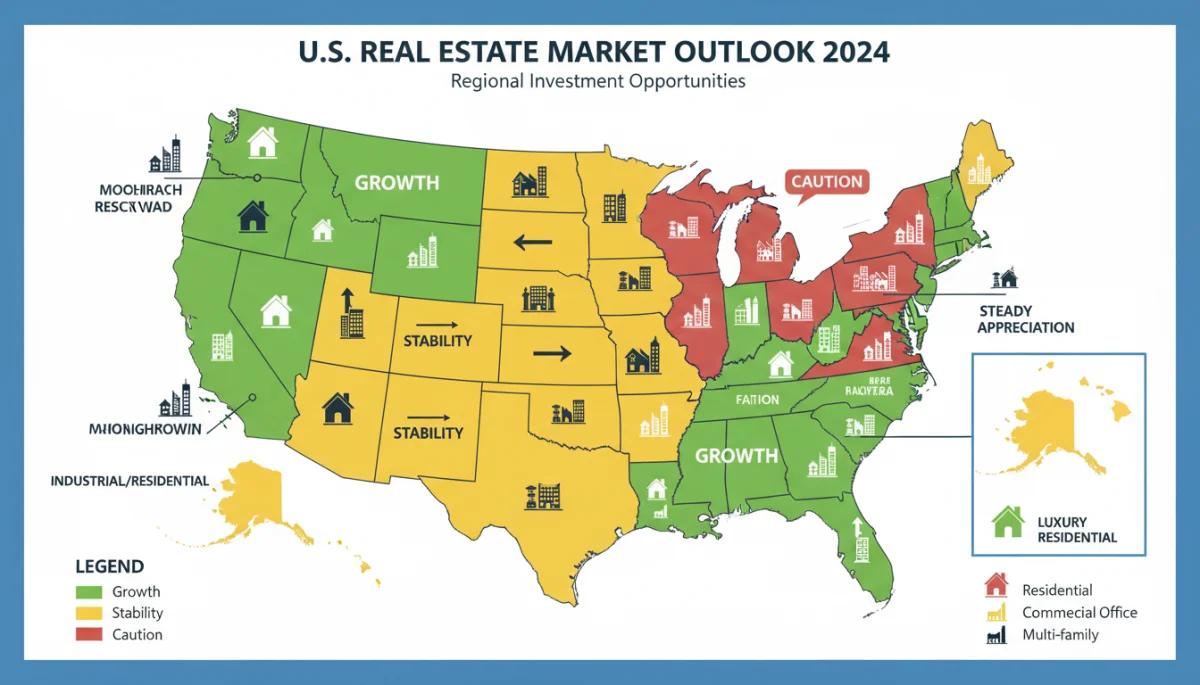
For the next three months, certain Sun Belt states and emerging tech hubs are poised for continued appreciation, albeit at a more tempered pace than previous years. Conversely, some historically expensive coastal markets may experience a flattening or slight correction as affordability constraints push buyers to more accessible regions. The rental market, particularly for multi-family units, remains strong in many urban centers due to high demand and persistent supply shortages.
Emerging Hotspots for Residential Investment
Several areas are showing promising signs for residential investment over the short term. These often combine strong economic fundamentals with a growing population base.
- Texas Triangle (Austin, Dallas, Houston): Continued corporate relocations and population growth drive demand.
- Florida (Orlando, Tampa): Attractive for retirees and remote workers, bolstered by tourism and business-friendly policies.
- Raleigh-Durham, NC: A burgeoning tech and research hub attracting a young, affluent workforce.
- Boise, ID: Offers a high quality of life and relatively affordable housing, drawing migrants from more expensive Western states.
The residential market in 2026 demands a localized and agile investment strategy. Identifying regions with sustainable growth drivers and understanding the specific housing needs of those populations will be critical for achieving favorable returns in the coming months.
Commercial Real Estate: Navigating Sectoral Shifts
Commercial real estate (CRE) in 2026 is undergoing significant transformations, with certain sectors thriving while others face headwinds. The lasting impacts of remote work, e-commerce acceleration, and evolving consumer behaviors are reshaping demand for office, retail, industrial, and hospitality properties. Investors must be discerning, focusing on sectors demonstrating resilience and adaptability.
The industrial sector, particularly logistics and warehousing, continues its robust performance driven by the insatiable demand for online retail and efficient supply chains. Conversely, the traditional office market faces ongoing challenges, with vacancy rates remaining elevated in many urban cores. However, premium, amenity-rich office spaces in desirable locations are still attracting tenants, suggesting a flight to quality.
Industrial and Logistics Properties
The growth of e-commerce shows no signs of slowing, making industrial properties, such as distribution centers, fulfillment centers, and data centers, highly attractive. Proximity to major transportation hubs and population centers remains a key determinant of value.
- Last-Mile Facilities: High demand for smaller warehouses closer to urban consumers.
- Cold Storage: Growing sector driven by online grocery and pharmaceutical delivery.
- Data Centers: Essential infrastructure for the digital economy, experiencing consistent demand.
The commercial real estate landscape in the next three months will favor investors who can identify and capitalize on these sectoral shifts, particularly those with a strong understanding of industrial logistics and the evolving needs of modern businesses.
The Role of Technology and Data in Investment Decisions
In 2026, technology and data analytics are no longer supplementary tools but essential components of a successful real estate investment strategy. Predictive analytics, AI-driven market forecasts, and sophisticated data visualization platforms provide investors with unparalleled insights into market trends, property valuations, and potential risks. Leveraging these tools can significantly enhance decision-making and uncover opportunities that might otherwise remain hidden.
From identifying undervalued properties to forecasting rental demand in specific micro-markets, technological advancements offer a competitive edge. Geo-spatial data, for instance, can reveal patterns in urban development, infrastructure projects, and demographic shifts, providing a more granular understanding of a property’s future potential. Smart contracts and blockchain technology are also gaining traction, streamlining transactions and enhancing transparency.
Predictive Analytics for Market Forecasting
AI and machine learning algorithms can analyze vast datasets, including historical prices, economic indicators, social media sentiment, and even weather patterns, to generate highly accurate short-term market forecasts. This allows investors to anticipate shifts rather than merely react to them.
- Demand Forecasting: Predicting future housing or commercial space needs.
- Risk Assessment: Identifying properties vulnerable to environmental or economic downturns.
- Optimized Pricing: Recommending optimal buy/sell prices based on real-time data.
Ultimately, integrating cutting-edge technology and robust data analytics into the investment process is not just an advantage in 2026; it is a necessity. Investors who embrace these tools will be better positioned to make timely and profitable decisions in a rapidly evolving market.
Financing Strategies and Capital Markets
The availability and cost of capital are fundamental to real estate investment, and 2026 presents a nuanced environment for financing strategies. Interest rates, while potentially stabilizing, remain a critical factor, alongside the evolving landscape of traditional and alternative lending sources. Investors must be adept at structuring deals that optimize their capital stack and minimize financial risk over the short to medium term.
Traditional bank lending continues to be a cornerstone, though underwriting standards may vary based on market sentiment and regulatory pressures. However, private credit and debt funds are playing an increasingly significant role, offering more flexible terms and faster execution for certain asset classes. Understanding the interplay between these sources and how they react to economic indicators is vital for securing favorable financing.
Diversifying Funding Sources
Relying on a single financing channel can be risky. Astute investors are exploring a mix of options to ensure liquidity and capitalize on opportunities as they arise.
- Commercial Banks: Still a primary source for established assets and developers.
- Private Equity/Debt Funds: Offer flexibility for opportunistic or value-add projects.
- Crowdfunding Platforms: Gaining traction for smaller-scale projects and niche markets.
- REITs (Real Estate Investment Trusts): Provide liquidity and diversification for public market investors.
Effective financing in 2026 requires a comprehensive understanding of capital markets and a proactive approach to securing the most advantageous terms. Diversifying funding sources and maintaining strong relationships with lenders will be key to successful real estate ventures in the coming months.
Risk Management and Due Diligence in a Shifting Market
In any market, but especially one as dynamic as 2026’s real estate landscape, robust risk management and thorough due diligence are indispensable. The rapid pace of market shifts necessitates a proactive approach to identifying, assessing, and mitigating potential pitfalls. Investors who overlook these critical steps risk significant capital erosion and missed opportunities.
Environmental factors, regulatory changes, and local economic vulnerabilities can all impact a property’s value and income potential. A comprehensive due diligence process extends beyond financial analysis to include detailed market research, property condition assessments, legal reviews, and an understanding of local zoning and development regulations. This holistic approach ensures that investments are well-founded and resilient against unforeseen challenges.
Key Areas of Due Diligence for 2026
As market conditions evolve, certain aspects of due diligence become even more critical for short-term investment horizons.
- Environmental Assessments: Evaluating climate risks (e.g., flood zones, wildfire susceptibility) and sustainability compliance.
- Demographic Shifts: Analyzing population changes, income levels, and employment trends at a micro-market level.
- Regulatory Landscape: Monitoring changes in zoning laws, rent control initiatives, and property tax policies.
- Technological Obsolescence: Assessing if a property’s infrastructure can adapt to future technological demands (e.g., smart building features, high-speed internet).
In conclusion, a meticulous approach to risk management and due diligence is not merely a safeguard; it is a strategic advantage. By thoroughly vetting every aspect of a potential investment, real estate professionals can make more confident decisions and protect their portfolios against the inherent volatility of the 2026 market.
| Key Investment Area | 3-Month Outlook |
|---|---|
| Residential Hotspots | Continued growth in Sun Belt and tech hubs, tempered appreciation. |
| Industrial & Logistics | Strong demand driven by e-commerce, especially last-mile and cold storage. |
| Office Market | Challenges persist, but premium, amenity-rich spaces show resilience. |
| Technology Integration | Essential for predictive analytics and identifying nuanced opportunities. |
Frequently Asked Questions About 2026 Real Estate Investment
The Sun Belt states, particularly regions in Texas and Florida, along with emerging tech hubs like Raleigh-Durham, NC, and Boise, ID, are anticipated to show notable residential and commercial growth due to strong job markets and population migration.
Stable or slightly decreasing interest rates could stimulate borrowing and buyer demand, fostering market activity. Conversely, unexpected rate increases might cool the market by increasing borrowing costs and reducing affordability for both residential and commercial properties.
Industrial and logistics properties, especially last-mile distribution centers and cold storage facilities, are expected to continue their strong performance. Data centers also present robust opportunities due to the ongoing growth of the digital economy and cloud services.
While the traditional office market faces challenges, investment in premium, amenity-rich office spaces in desirable urban locations remains viable. There’s a clear flight to quality, with modern, flexible workspaces attracting tenants willing to pay for superior environments.
Technology is crucial. Predictive analytics, AI-driven market forecasts, and data visualization tools offer unparalleled insights into market trends, property valuations, and risk assessment, providing a significant competitive advantage for informed and timely investment decisions.
Conclusion
The real estate investment landscape in 2026 is characterized by both significant challenges and dynamic opportunities. Success over the next three months hinges on an investor’s ability to keenly observe macroeconomic indicators, pinpoint regional and sectoral growth areas, and leverage advanced technology for data-driven decisions. While the residential market in growth regions and the industrial sector show strong potential, the office market demands a more nuanced, quality-focused approach. Strategic financing and rigorous due diligence are not merely best practices but essential components for mitigating risk and maximizing returns in this evolving environment. Adapting swiftly to these shifts, rather than adhering to outdated strategies, will define the most profitable outcomes for real estate investors across the US.